
01 · Order
Snacks first, then a seat
Start with a small bowl — ba-wan, thick soup or chicken rice — before committing to a sit-down hotpot. It keeps you from filling up on the first stop.
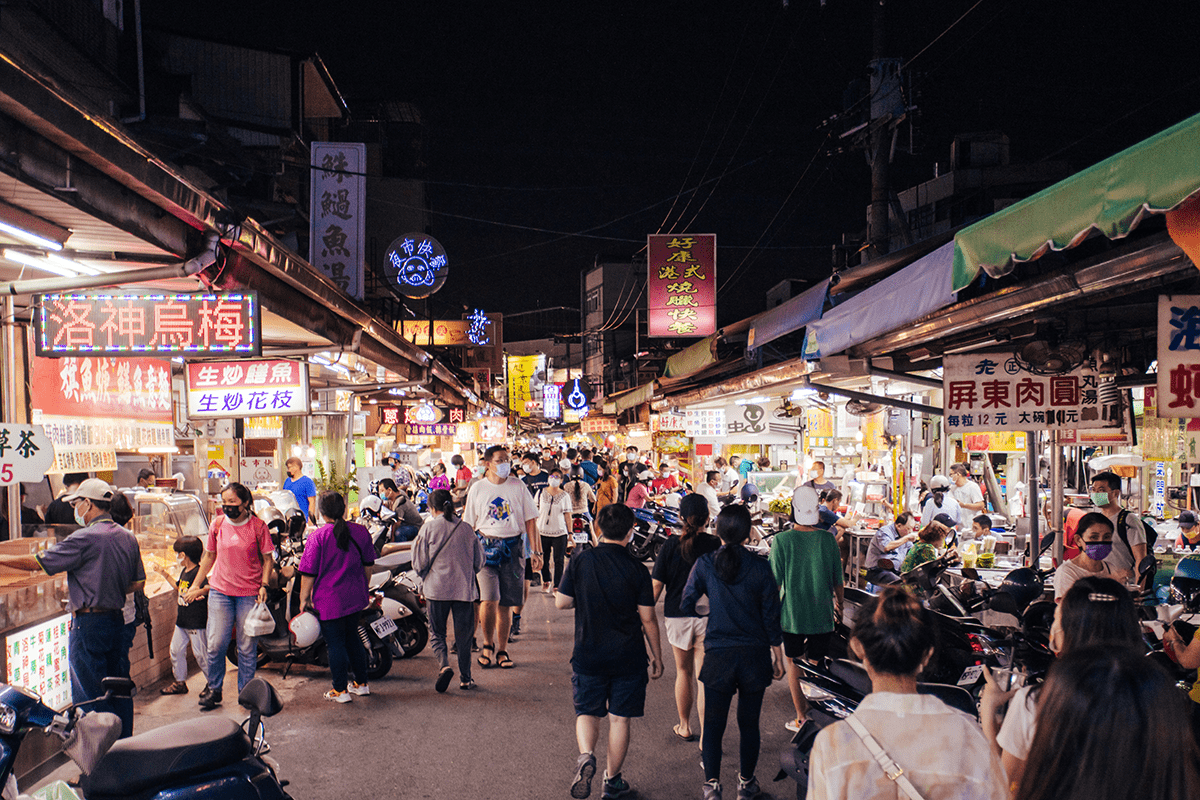
Pingtung Night Market · Southern Taiwan
Pingtung Night Market runs along Minzu Road a few minutes from Pingtung railway station. Steamed ba-wan, chicken rice, glossy thick soups, Shantou hotpot and shaved ice keep one street fed from late morning to midnight.
TONIGHT'S TICKET
The market is a loose cluster of independent stalls and restaurants. Opening times differ shop by shop, so check individual listings if you are chasing one specific bowl.
01 · Order
Start with a small bowl — ba-wan, thick soup or chicken rice — before committing to a sit-down hotpot. It keeps you from filling up on the first stop.
02 · Timing
This is not a market that only opens at night. Several classic stalls open in the late morning, and the street changes character again after dark.
03 · Side lanes
Turn into the parallel lanes to see old shopfronts and the older grain of downtown Pingtung — the district reads very differently one block away.
What to eat
The official Pingtung travel listing highlights fig-seed jelly, mushroom pork soup, Shantou hotpot and steamed ba-wan. Add the everyday staples found along the street — chicken rice, Spanish mackerel soup, rice-blood cake and shaved ice — and the street starts to make sense.
Crispy fried mackerel sunk into glossy, slightly sweet southern-style broth — one of the most recognisable bowls near the market entrance.
Order a small portion or share it if you plan to hop between several stalls.
Pingtung-style steamed ba-wan: soft, sticky translucent skin, quite different from the deep-fried Changhua version most travellers know.
Some ba-wan shops open early. Come before noon if this is the reason for your trip.
Shantou hotpot is singled out in the official travel guide — a good choice when you have company and want to sit down properly.
Popular at dinner time; waiting and closing days follow the shop’s own schedule.
Thickened, bonito-scented soups with mushroom or swordfish are the everyday taste of this street.
One shop’s hours say nothing about another’s — stalls keep their own clocks.
Rice showered with savoury chicken dripping, plus a slice of rice-blood cake: the fastest full Pingtung meal you can get.
Start here rather than with dessert if you still have a lot of walking ahead.
Southern nights stay warm, so ending a bowl of soup with fig-seed jelly, herbal tea or shaved ice is entirely logical.
Ask for less sugar if you want it light.
Street snapshots
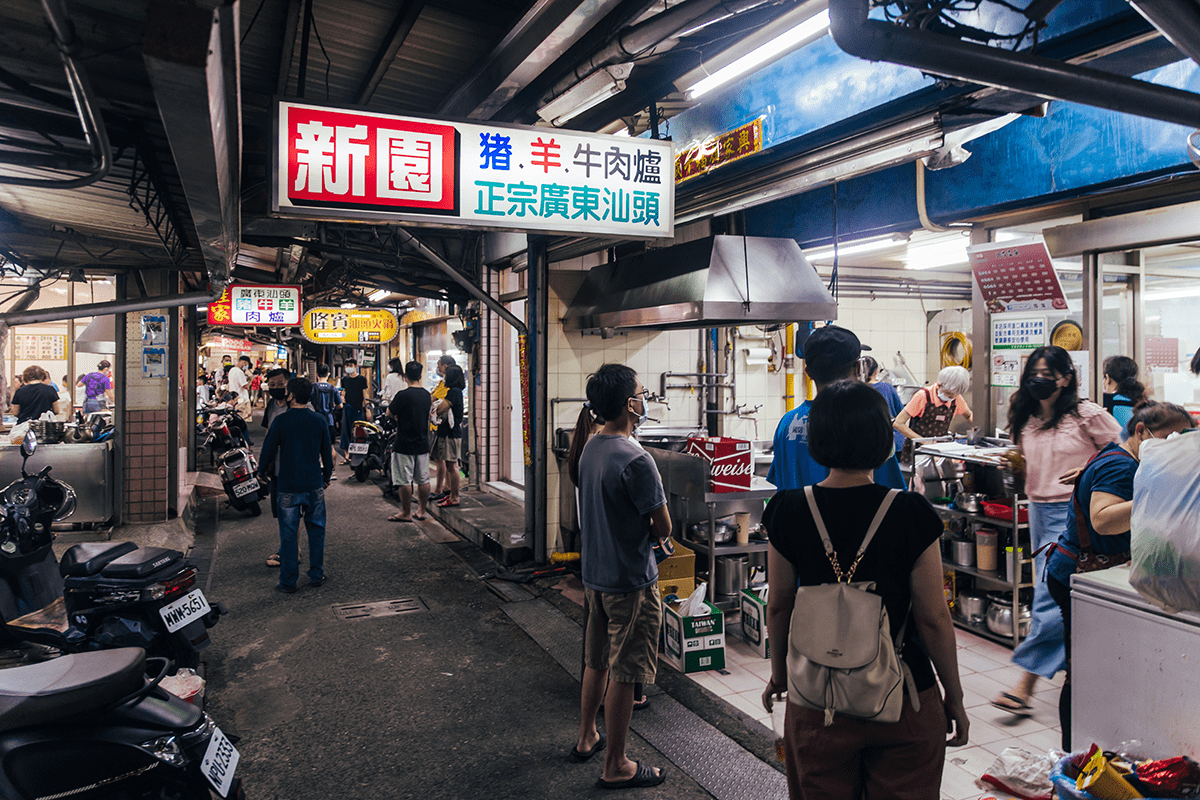
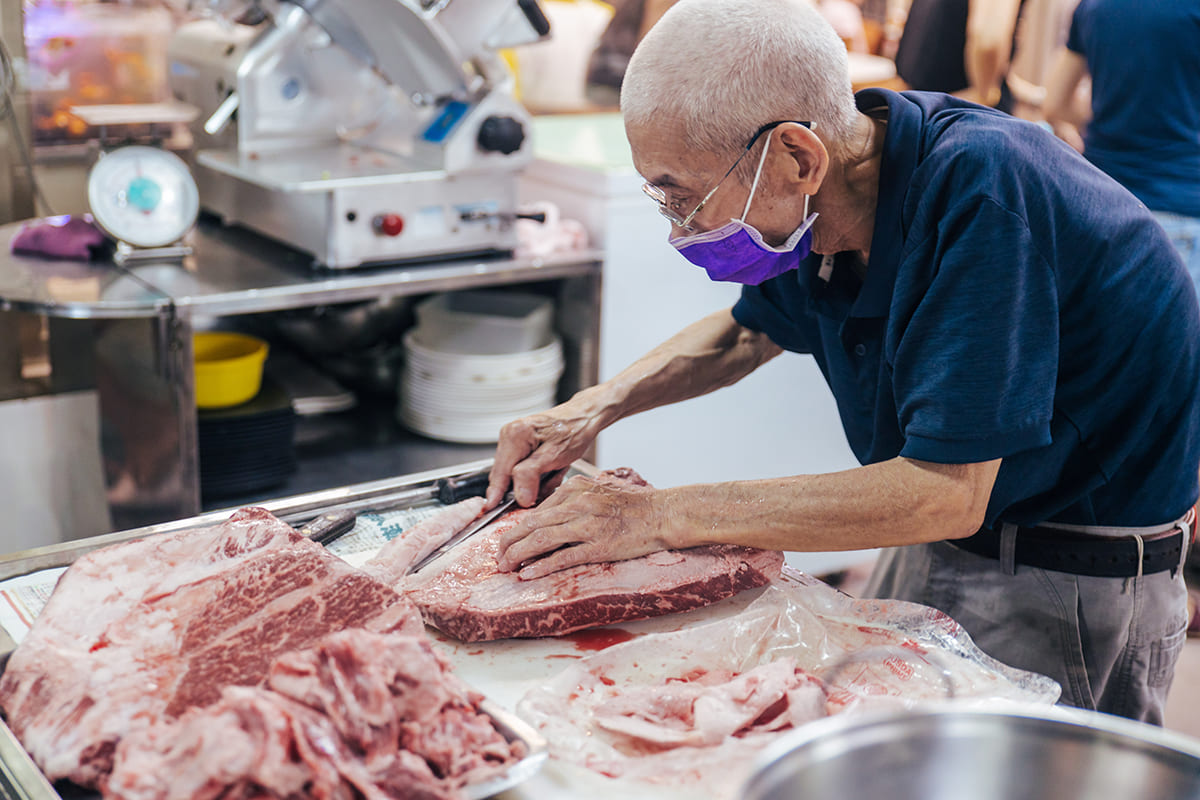
No AI-generated attraction photos — these are actual street images of the Pingtung market area.
Visit plan
The market sits close to the station; the walk itself is the easiest way to drop into the city’s pace.
Minzu Road is dense. What looks best at first glance is rarely the only option — one lap first avoids filling up too early.
Slip off the main street into the parallel lanes; the neighborhood turns from a food run into an evening walk.
If you have energy left, extend the after-dinner walk into the city’s historic and creative districts.
COST
No admission fee — you only pay for food and shopping. Prices vary by stall; this site avoids listing menu prices that go stale quickly.
TIME
Come after dusk for lanterns and the fullest dinner choice; visit in the daytime for early-opening ba-wan and breakfast-style snacks.
STAY
One hour to ninety minutes for a quick tasting round; two to three hours if you want a sit-down pot, photos and lane wandering.
MONEY
Small cash notes, a reusable bag and tissues. Some stalls take e-payment, but cash remains the most reliable option.
Getting there
🚆 Train
From Pingtung Station, walk toward Minzu and Fuxing roads — roughly ten minutes to the core of the market.
🚌 Bus & coach
City buses and intercity coaches connect at and around the station; routes change, so confirm the nearest stop the same day.
🚗 Driving
Follow Provincial Highway 1 or Freeway 3 into Pingtung City, then Fuxing and Minzu roads. Lanes here are narrow — skip hunting for curbside parking.
🛵 Scooter & bicycle
Ideal for short hops across the city centre; slow down where pedestrians and scooters share the lanes and use legal parking.
Parking
Several paid car parks sit around the market, including lots listed publicly near Minzu and Fuxing roads. On weekend evenings, park first and walk in rather than circling the narrow lanes of the market core.
Lot names, rates and availability change; check live map information on the day.
Nearby sights
An old temple easy to fold into a station-to-market walk through the old town.
A century-old city park with the surviving Chaoyang Gate and plenty of shade — a good post-meal walk.
A restored Japanese-era military dependents’ quarter turned food, design and culture quarter that photographs well from afternoon to dusk.
A repurposed building cluster for local makers, easy to pair with Victory Star Village in one slow city afternoon.
One more bite
STAPLES
Several old shops cluster around Minzu and Minquan roads; chicken dripping over rice is the classic quick Pingtung meal.
SWEET
After soup or hotpot, a cooling dessert or herbal tea is the natural southern way to close the meal.
TO SHARE
Sausage, offal and soup plates built for sharing; this is where everyday local food culture shows up most clearly.
DINNER
If you want the market to become a proper dinner, this local hotpot style is worth saving for the second half of the evening.
Go deeper
Practical notes on planning, hours and transport, written for walkers rather than bus tours.
Map
FAQ
Hours and ratings move over time. These pages follow the Pingtung County travel guide first and use public Google Maps data for location and ratings.
No. The market is an open street with free entry; you only pay individual vendors for food and shopping.
The Pingtung County tourism page currently lists 10:30–24:00. In practice each stall keeps its own hours, and Google Maps may show the place as open at any time, so verify individual shops if you have one specific dish in mind.
Yes. “Pingtung Tourist Night Market” is the name used by official tourism listings; locals usually say Pingtung Night Market or Minzu Road Night Market for the same food street near the Minzu–Fuxing crossing.
Walk toward Minzu and Fuxing roads from the TRA station — about ten minutes to the market core. A taxi or city bike share also works if you would rather not walk.
Several paid car parks operate around the market near Minzu and Fuxing roads. They fill up at dinner time and on weekends, so arrive early or come by train. Rates and availability follow the operator’s own notices.
For atmosphere and the widest dinner choice, come from dusk onwards. For early-opening ba-wan and breakfast-style snacks, daytime is better; avoid weekend dinner peaks if you dislike crowds.
Sixty to ninety minutes covers two or three snacks. Allow two to three hours if you want a hotpot, photos and a walk through the side lanes.
Some do, but cash is still the safest bet. Carry small notes and coins for the smallest stalls.
The market itself has no single closing day — each business decides, commonly taking one fixed day off a week or closing irregularly. Check Google Maps for that specific shop on the day.
Yes, though Minzu Road mixes arcade shopfronts with open-front stalls. Pick places with indoor seating, and during typhoon or heavy-rain warnings follow official notices and shop information.
Ahou Cifong Temple, Pingtung Park, Victory Star Village and Zhiren Town are all within walking or short driving distance — a practical afternoon-and-evening loop through Pingtung City.
Yes. The area is flat and distances are short. Skip the busiest hour of weekend evenings if you prefer space, and choose shops with seating.
Sources and practical notes
Names, address, highlights and official hours follow the Pingtung County “Pingtung Travel” listing; transport and parking notes draw on public Google Maps information. Ratings and review counts change over time — use the live Google Maps listing as the final reference.